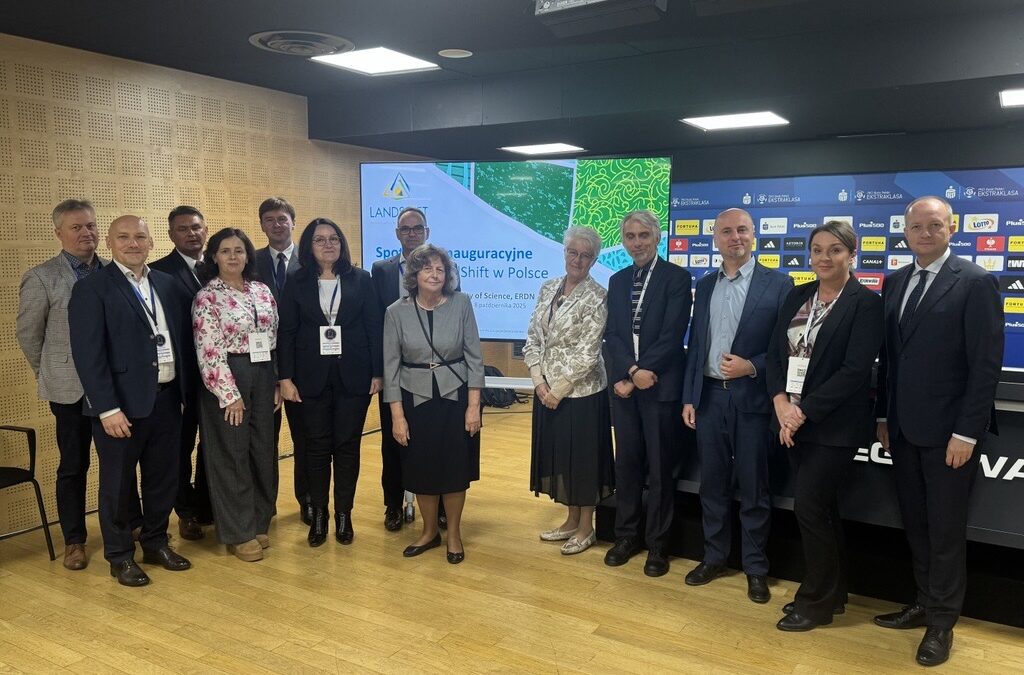
Behind the Living Spaces: ERDN on supporting co-creation across LandShift

Behind the Living Spaces: ERDN on supporting co-creation across LandShift

In LandShift, the Living Spaces are where the project’s ideas meet real places, real stakeholders and real land-use challenges. They are central to the project’s participatory approach, bringing together different actors to co-create Nature-based Solutions that respond to local needs and regional land management challenges.

Supporting this process requires careful coordination. Across the five Living Spaces, the European Rural Development Network (ERDN) supports the implementation of LandShift’s multi-actor approach, helping Living Space managing teams, research partners and wider stakeholder groups work together in a participatory and inclusive way.

As LandShift moves forward, this role becomes increasingly important. The Living Spaces will be involved in becoming familiar with, presenting and testing the project’s results, requiring clear communication between the project and local stakeholders.

In this Q&A, the ERDN team reflects on its role in LandShift, the value of the Living Spaces, the lessons learned so far, and the next steps for supporting co-creation across the project.

Insights shared by: Barbara Wieliczko, Marcin Żekało and Paweł Chmieliński.

How would you describe ERDN’s role in LandShift to someone who is hearing about the project for the first time?

ERDN is responsible for creating the framework and supporting the implementation of the multi-actor approach in the LandShift project. This approach helps ensure participatory and inclusive collaboration between different stakeholder groups in the co-creation of Nature-based Solutions for land use.

Through this work, ERDN supports collaboration across the countries participating in the project, with a key focus on urgent challenges such as climate change, biodiversity loss and unsustainable land management practices.

Why are the Living Spaces so important for the project, and how does working with them contribute to the research itself?

Living Spaces are vital for the co-creation of tailored Nature-based Solutions and for their promotion in the regions where they operate. They bring together members representing diverse stakeholder groups, whose perspectives are essential for shaping solutions that respond to real needs.

By contributing their local knowledge and experience, Living Space members significantly strengthen the research carried out within LandShift. Their input helps ensure that the solutions proposed are tailored to the specific needs and land management challenges of each area.

What does coordinating the Living Spaces involve in practice?

Coordination takes place on two practical levels. At project level, ERDN acts as a facilitator, supporting cooperation between the Living Space managing teams and the consortium partners responsible for research tasks. This helps ensure that partners work together towards LandShift’s wider objectives.

At Living Space level, ERDN supervises the coordination of activities across all five Living Spaces. This includes supporting the managing teams in organising planned activities with Living Space members and wider stakeholder groups through Community Labs and Policy Labs.
How do you help ensure that the different local realities and stakeholder perspectives of each Living Space are reflected in the wider project?

ERDN supports this process through several activities. First, by supervising the implementation of the multi-actor approach in each Living Space, ERDN helps ensure that diverse local realities and stakeholder perspectives are well represented.

Second, ERDN supports partners in applying co-creation methods through training and consultations. Finally, by facilitating dialogue between Living Space managing teams and other consortium partners, ERDN helps ensure that project results take into account the diversity of local contexts and stakeholder perspectives.

What have been some of the main insights or lessons learned so far from working with the Living Spaces?

One of the main insights, both for ERDN and for the LandShift project as a whole, is that constructive dialogue between different actors still needs to be actively supported. In many cases, this type of dialogue is not yet an obvious or established practice in the creation of new policies.

For ERDN, as a partner with strong expertise in facilitating multi-actor approaches, an important lesson has been the need to constantly look for and test new ideas for attracting stakeholders and maintaining their commitment throughout the process.

Looking ahead, what are the next important steps for the Living Spaces, and how will ERDN continue supporting them?

The next steps include helping the Living Spaces become familiar with the project’s results, as well as presenting and testing these results locally. This will require stronger and more targeted communication between the project and the members of the Living Spaces.

ERDN will continue to support the Living Space managing teams as key intermediaries between the project and Living Space members. This support will include best practices, training, individual consultations and problem-solving sessions. ERDN will also continue following EU-level policies to help the Living Spaces contribute up-to-date insights to relevant dialogue topics.

In one sentence, what do you hope the Living Spaces will achieve by the end of LandShift?

We hope that the Living Spaces will become platforms for constructive dialogue and the co-creation of solutions tailored to local land-use management issues, which can be sustained beyond the project and serve as best practice for other parts of Europe.
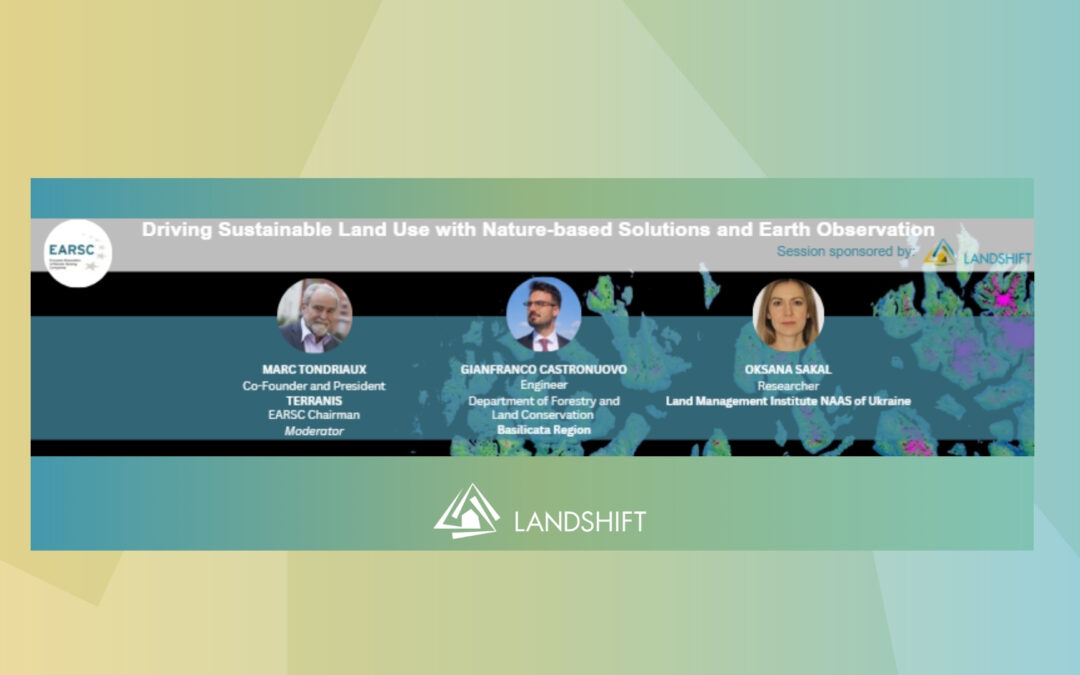
LandShift at EXPANDEO 2026: Driving Sustainable Land Use with Nature-based Solutions and Earth Observation

LandShift at EXPANDEO 2026: Driving Sustainable Land Use with Nature-based Solutions and Earth Observation

https://expandeo.earsc.org/agenda-2026/Date: Thursday, 11 June 2026
Time: 11:45–12:30
Location: Brussels, Belgium
Event: EXPANDEO 2026, held across 10–11 June 2026
Session title: Driving Sustainable Land Use with Nature-based Solutions and Earth Observation

LandShift will take part in EXPANDEO 2026 with a dedicated session exploring how Nature-based Solutions (NbS) and Earth Observation (EO) can support more sustainable and climate-resilient land-use management.

The session, titled “Driving Sustainable Land Use with Nature-based Solutions and Earth Observation”, will focus on the needs and challenges faced by local authorities in managing land sustainably, and how NbS can offer practical, place-based responses to these challenges.

Through the lens of the Horizon-funded LandShift project, the discussion will highlight how project tools, approaches and Living Space activities are supporting local and regional authorities in developing more informed and sustainable land-use strategies. The session will also explore the role of Earth Observation in strengthening the NbS approach, including its potential to support monitoring, planning and evidence-based decision-making.

By bringing together perspectives from land-use management, Nature-based Solutions and EO, the panel will reflect on how these approaches can be adapted and replicated across different regions and territorial challenges.

Stay tuned for more updates on LandShift’s participation in EXPANDEO 2026.

👉Learn more about the event here: https://expandeo.earsc.org/agenda-2026/


LandShift Mid-Term Meeting in Warsaw: Strengthening Collaboration Across Living Spaces

LandShift Mid-Term Meeting in Warsaw: Strengthening Collaboration Across Living Spaces

LandShift Mid-Term Meeting in Warsaw: Strengthening Collaboration Across Living Spaces

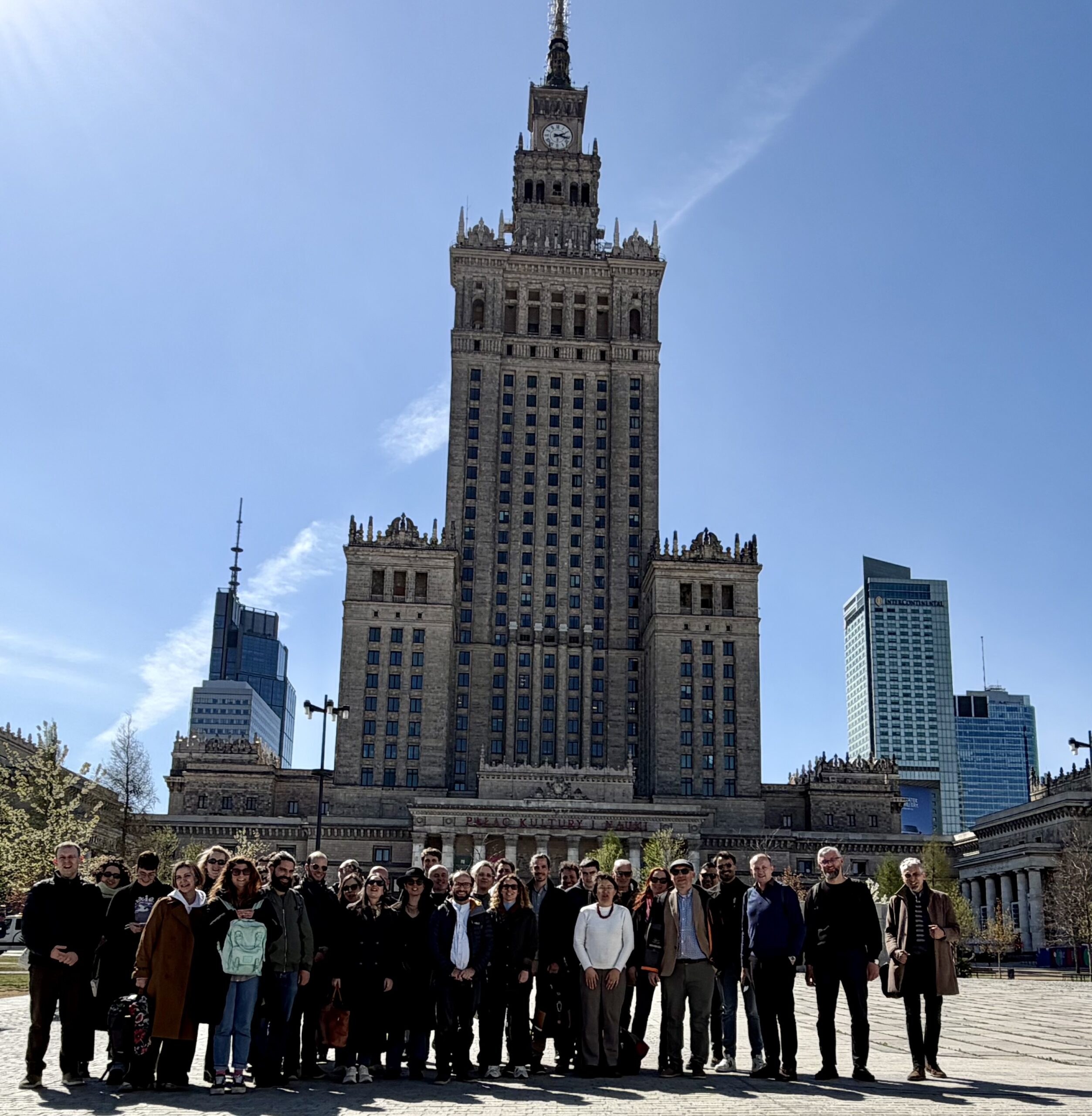
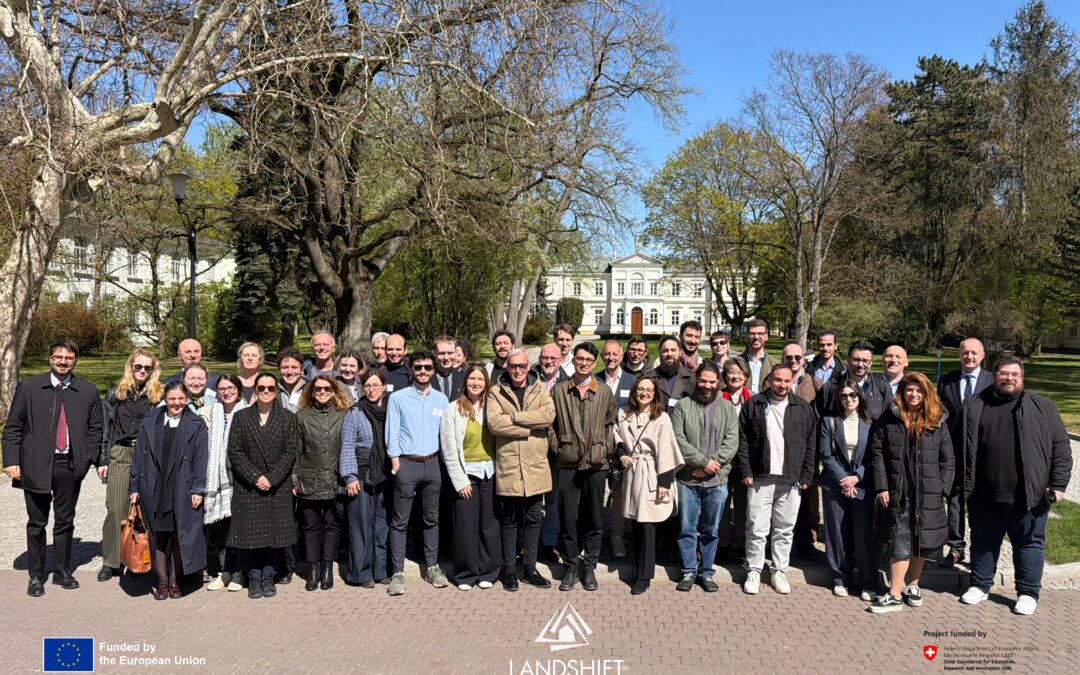
Last week, LandShift partners gathered in Warsaw for the project’s Mid-Term Consortium Meeting, marking an important milestone as the project moves into its second phase.

Bringing together a diverse group of organisations, LandShift is built on collaboration across disciplines, regions, and expertise. Meetings like this are essential, not only to review progress, but to strengthen the connections that allow the project to function as a truly integrated effort.

The meeting was hosted by our Polish Living Space partners, Warsaw University of Life Sciences, Mazovia Region, and European Rural Development Network, who welcomed the consortium and provided valuable insights into the Mazovia Living Space.

Exploring the Mazovia Living Space – An Earth Day in Practice

The first day of the meeting coincided with Earth Day, offering a timely opportunity to step outside the meeting room and engage directly with the local context.

The field visit began at the Green Campus of Warsaw University of Life Sciences, where partners explored initiatives supporting biodiversity through dedicated green spaces and ecological design.

The tour continued to Michałowice Municipality, where the consortium was warmly welcomed by the Mayor and local representatives, who shared insights into how, at the municipal level, conscious efforts are being made to prioritise environmental protection over continuous expansion and development. In her presentation, the mayor of the municipality Małgorzata Pachecka highlighted the legislative context shaping these decisions, noting that certain frameworks can enable urban growth that may put pressure on biodiversity-rich areas, and areas that can play an important role in carbon sequestration. All in all, the municipality showcased how climate action is driven not only by large-scale strategies, but also by consistent, practical decisions at the local level.

This area also hosts one of the Living Space’s data collection sites, which plays a key role in LandShift’s research on climate and carbon dynamics. At this site, on-the-ground measurements are collected to assess carbon storage and greenhouse gas emissions. By linking this information with climate data and land-use patterns, LandShift can better understand how different ecosystems and land uses contribute to carbon sequestration or emissions.

A particularly meaningful stop was a visit to a local public kindergarten, where children are introduced early to environmental awareness and sustainable practices, a reminder that long-term impact starts with communities.

In the afternoon, we embarked on a tour of some of Warsaw’s iconic sites, which we explored from an urban planning perspective. What stood out was the abundance of green spaces in the city, which we were able to observe from one of the city’s landmark buildings, the Palace of Culture and Science. This was a clear example of how the preservation of or urban green spaces can be the result of deliberate planning.

The day also opened space for synergies with fellow Horizon Europe projects such as SOILTRIBES and SOILSCAPE, reinforcing shared ambitions around soil health and community-driven sustainability.

Altogether, the field visit captured the essence of the Living Spaces approach: connecting research, policy, and everyday practice.

From Insights to Action: Rolling Up Our Sleeves

Day 2 shifted the focus from observation to action.

Following a morning of project presentations, partners moved into a more hands-on format, engaging in a series of interactive workshops designed to deepen collaboration and translate insights into concrete steps.

In the afternoon, partners took part in a collaborative exercise organised by Metabolic Institute, focusing on mapping land-use challenges, interventions, and scenario modelling across the Living Spaces.

Each Living Space represents a unique regional context, facing distinct yet interconnected challenges, from urban pressures and forest cover loss to drought, wildfires, soil pollution, and biodiversity decline.

Through this exercise, partners explored how these challenges can be addressed through targeted interventions and how different land-use decisions may shape future outcomes.

At the core of this approach is the development of regional roadmaps, tailored to local priorities and needs. These roadmaps integrate nature-based solutions and are supported by detailed scenario modelling, ensuring that LandShift’s tools can provide meaningful, evidence-based guidance for decision-makers.

Aligning for the Next Phase

On Day 3, discussions continued with a focus on aligning priorities and next steps as the project enters its second half.

Partners are advancing the collection of climate and environmental data, while further developing monitoring and modelling frameworks in close collaboration with Living Spaces and stakeholders. A key priority remains ensuring that project tools and results effectively support real-world decision-making at local and regional levels.

The meeting reaffirmed the strength of the LandShift consortium and the shared commitment to delivering impactful, community-driven solutions for climate-resilient land use.

LandShift at the EU Carbon Farming Summit: Advancing a “Beyond Carbon” Approach

LandShift at the EU Carbon Farming Summit: Advancing a “Beyond Carbon” Approach

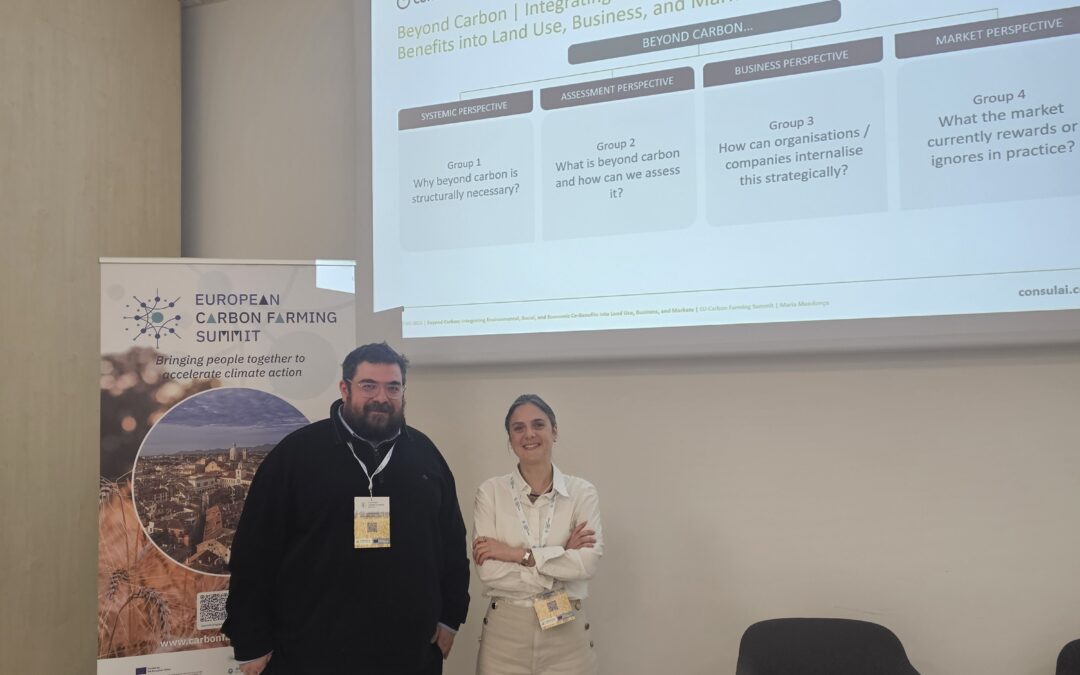
On 18 March, LandShift was represented at the EU Carbon Farming Summit in Padova, Italy, by Ioannis Varvaris, Scientific Coordinator of LandShift, based at the ERATOSTHENES Centre of Excellence (ECoE) which is coordinating LandShift, and Francesca Piatto from the consortium partner European Association of Remote Sensing Companies (EARSC).

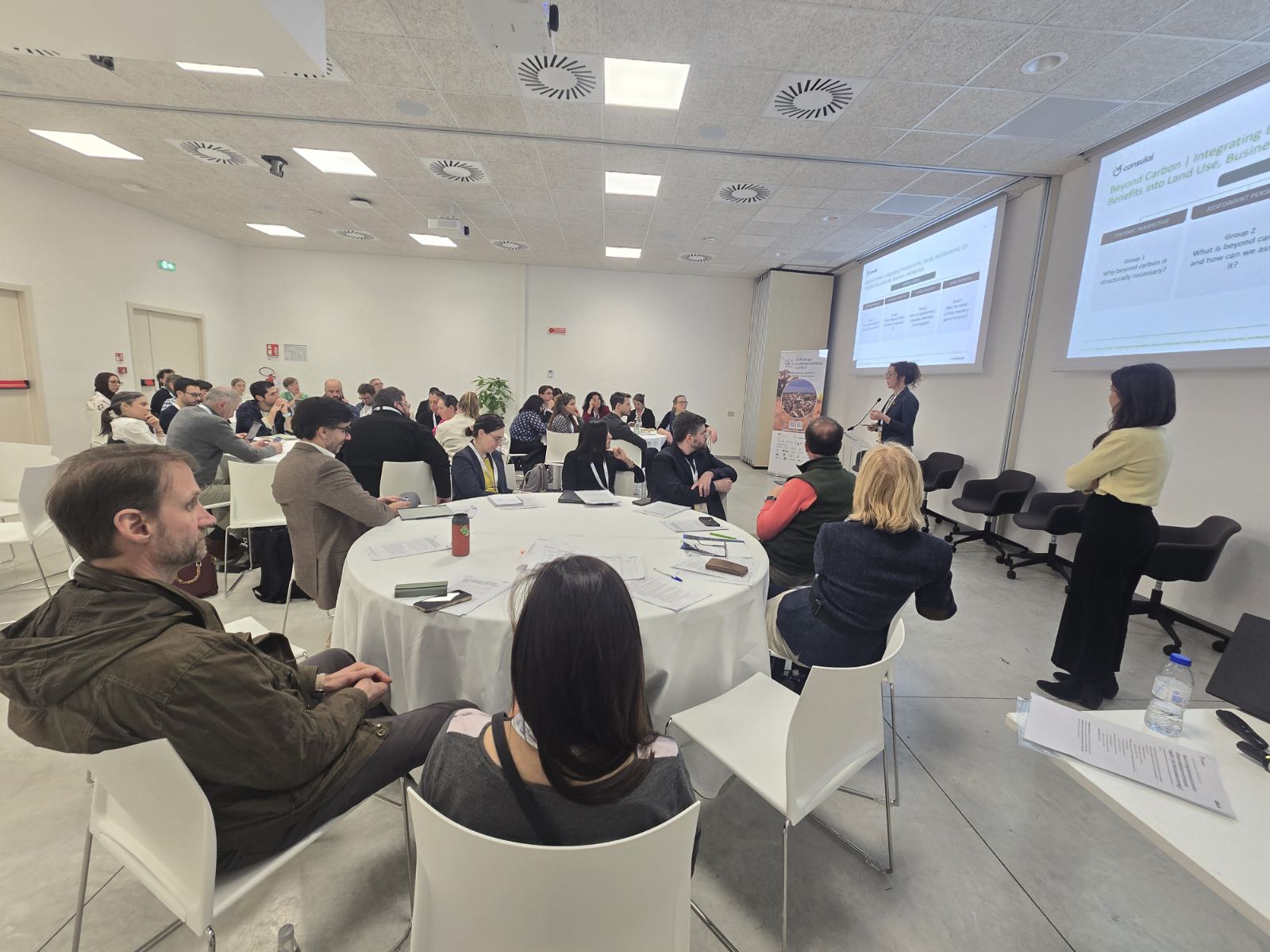
LandShift, in collaboration with the agribusiness consultancy CONSULAI co-organised the workshop “Beyond Carbon: Integrating Environmental, Social, and Economic Co-Benefits into Land Use, Business, and Markets.” The session aimed to explore how the transition toward climate-neutral and resilient land-use systems can move beyond a carbon-centric approach by explicitly integrating environmental, social, and economic co-benefits into land management practices and land-use strategies. It brought together perspectives from governance, community-based approaches, farm and business strategies, MRV frameworks, and market development to examine how co-benefits can support soil health, biodiversity conservation, climate adaptation, social value creation, and long-term economic viability.

Discussions highlighted that carbon sequestration in inherently linked to soil health, the protection of biodiversity, soil health, and socio-economic development. Thus, these factors were identified as co-benefits that are crucial to ensure long-term climate resilience.

Figure 2: Presentation on LandShift by Dimitrios Koumoulidis

From Farm-level Practices to Comprehensive Strategies

Participants discussed how these priorities could be translated into concrete actions. Particularly, it was discussed how carbon farming can evolve from individual practices at farm level into integrated land-use strategies at broader levels. What is needed to do so is:

  • Drawing on Nature-based Solutions (NbS) and Living Lab approaches as key implementation pathways.
  • Strong cooperation across stakeholders.
  • Linking farm-level MRV systems to regional strategies.
  • Expanding MRV to include sustainability and social dimensions.

The importance of long-term monitoring, stable governance structures, adequate funding, and community acceptance was also strongly emphasised. The discussion also underscored the importance of evolving policy frameworks and standards to move beyond a sole focus on carbon, and instead reward comprehensive co-benefit bundles. This includes better integration of biodiversity and ecosystem service indicators into frameworks such as the Carbon Removal Certification Framework (CRCF). Overall, the session demonstrated that achieving impact “beyond carbon” requires strong alignment between policy, business strategies, MRV systems, and financing mechanisms, supported by local experimentation and long-term commitment.

What LandShift can offer

LandShift contributes to this vision by developing decision-support tools, translating complex co-benefits into actionable implementation roadmaps by making them measurable, comparable, and investable. In so doing, LandShift plays a crucial role in positioning carbon farming as part of a broader systemic transformation towards more sustainable, resilient, and inclusive land-use practices across Europe.

PRESS CONTACT

For more information, press materials, or interview requests, please contact:

White Research

Dissemination & Communication Manager,

Nikolaos Sotiriou: [email protected]

Eva Steinhorst: [email protected]

Press Release #4

Press Release #4

BRUSSELS, March 2026

LandShift is proud to announce the launch of its Nature-Based Solutions (NbS) Library, an open-access digital repository of implemented European nature-based solutions designed to support regional land-use strategy development. Sixteen months into the project, this milestone marks an important step in translating LandShift’s analytical work into practical, deployable action.

This critical task has been undertaken by a dedicated team from the LandShift partner, Metabolic Institute, working at the intersection of academic research and real-world experimentation.

BRIDGING THE GAP BETWEEN POLICY AMBITION AND PRACTICAL IMPLEMENTATION

Europe’s climate neutrality and biodiversity restoration goals require more than strategic frameworks. Delivering them depends on the availability of tested, scalable solutions that can be adapted to diverse regional contexts. Such a solution can be the Nature-based solutions, as defined by the European Commission, which provide a pathway to address multiple challenges simultaneously, including carbon sequestration, biodiversity recovery, sustainable food systems, and ecosystem resilience. However, their application remains fragmented due to limitations in evidence, transferability, and contextual adaptation. The LandShift NbS Library addresses this gap by offering structured, accessible, and evidence-based examples of implemented solutions that can inform regional decision-making.

A PRACTICAL TOOL FOR DECISION-MAKERS AND STAKEHOLDERS

The NbS Library is an interactive platform built on the systematic identification and curation of implemented NbS cases across Europe. Each case is categorised by ecosystem type, land-use challenge, and solution approach, enabling users to explore and compare options tailored to their specific needs.

As Antoine Coudard, Bioeconomy Lead at Metabolic Institute, explains:

“The Nature-Based Solutions Library is designed as a practical resource for the five LandShift Living Spaces as they develop their future territorial land-use strategies. It supports the translation of analytical insights into actionable options by providing concrete examples that can be adapted and implemented locally.”

The platform has been developed in close collaboration with representatives from the project’s Living Spaces, ensuring alignment including land degradation, biodiversity loss, and urbanisation dynamics.

WHAT MAKES LANDSHIFT LIBRARY UNIQUE

While several NbS databases already exist, the LandShift NbS Library stands out through:

  • A focus on implemented solutions, rather than conceptual approaches or early-stage pilots
  • Strong European relevance, ensuring alignment with EU policies and regional planning needs
  • Structured curation, enabling targeted exploration by ecosystem, challenge, and solution type

Looking ahead, the platform will further integrate the principles of the New European Bauhaus, strengthening the connection between environmental performance, social inclusion, and aesthetic quality in land-use planning.

DESIGNED FOR REAL-WORLD USE AND LONG-TERM IMPACT

The NbS Library is designed as a user-friendly and evolving tool, supporting a wide range of stakeholders, including:

  • Regional and local authorities
  • Land-use planners and policymakers
  • Researchers and practitioners
  • NGOs and community organisations

By providing curated, real-world examples, the platform supports evidence-based decision-making, reduces reliance on fragmented sources, and facilitates more effective stakeholder discussions.

The LandShift Nature-Based Solutions Library is now publicly available here

MORE ABOUT LANDSHIFT

The alarming decline in net removals within the LULUCF (Land Use, Land Use Change, and Forestry) sector presents a significant challenge to advancing climate mitigation efforts. However, the sector offers considerable untapped potential for driving climate action through integrated strategies. By harnessing the diverse dimensions of land use and management, co-created solutions can be developed to enhance carbon sequestration and strengthen ecosystem resilience.

To address these challenges, LandShift introduces a comprehensive framework aimed at supporting the co-development of regional strategic roadmaps that effectively balance socio-economic and environmental objectives. Through a synergistic and cohesive approach, LandShift aligns with all relevant European Union key policies, such as the European Green Deal and New European Bauhaus (NEB), working to achieve climate neutrality and assist in the EU’s goal of removing 310 million tons of CO2 by 2030 through land-based actions and community collaboration.

PRESS CONTACT

For more information, press materials, or interview requests, please contact:

Nikolaos Sotiriou

Dissemination & Communication Manager,

White Research

[email protected]