
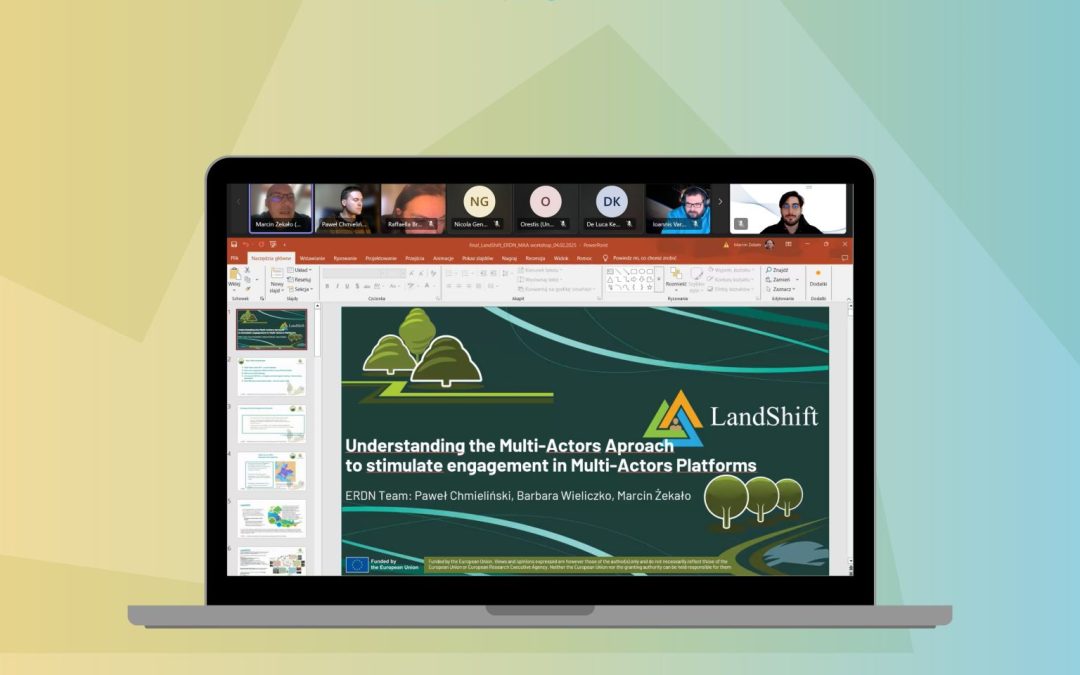
One of the core methodologies of the LandShift project is to engage in Multi-Actor Approaches (MAA) as a cornerstone for cross-collaborative exercises and project output development. Indeed, utilising an MAA focuses on seizing opportunities and finding solutions to real needs, problems, and challenges faced by a wide range of stakeholders that are facing a similar, if not the same, challenge. In MAA projects, there is a strong collaboration of partners as well, especially those that have complementary expertise (scientific, practical, or any other) to ensure a holistic approach and maximise inclusivity in addressing specific challenges.
A few months ago, Polish partners from the European Rural Development Network engaged in an MAA and platform workshop to set the stage for collaboration and synergies across the project’s five living labs in France, Greece, Poland, and Ukraine.
This is an important step forward for the project as these living labs/living spaces will serve as a real-world testing grounds to tackle land-use challenges, balance competing demands, as well as foster co-creation, trust, and innovation in the long term. Indeed, through a structured co-creation process, from the co-planning stage to establishing co-governance, all stakeholders present will play a crucial in role in shaping sustainable land-use solutions to combat climate change.
Here it is very important to highlight not only the importance of the Living Spaces as testing grounds and also, both figuratively and literally, real-life applications, to understand the difference in approaches across 5 regions/countries, but also building connections across the spaces themselves.
Indeed, it is not only about the 5 spaces to act independently, but it is also about establishing a structure to share best practices, differences, common challenges, and key takeaways to foster shape sustainable land-use solutions in mitigating and adapting to climate change effects.
Learn more about such workshops in our methodology and our approach section.