
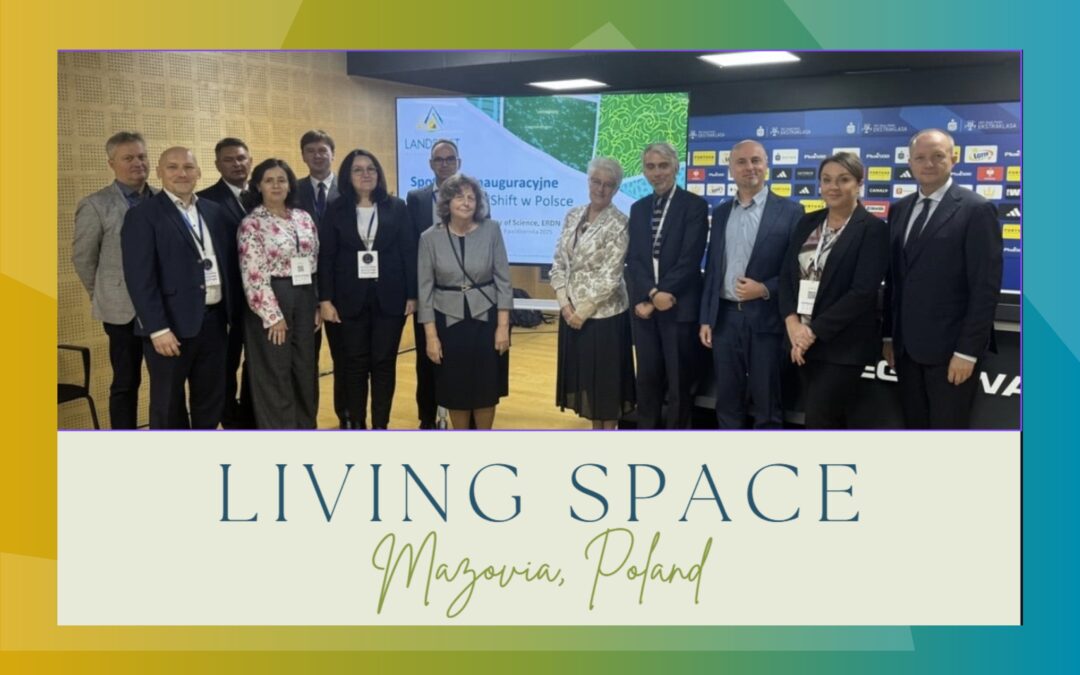
Mazovia is Poland’s largest and most populous voivodeship, characterised by a striking contrast between the rapidly expanding Warsaw Metropolitan Area and the vast agricultural landscapes that surround it. As both an economic hub and a leading agricultural region, Mazovia offers a unique setting for exploring how climate resilience, rural development and sustainable land use can be brought together within the LandShift framework.
A Landscape of Contrasts
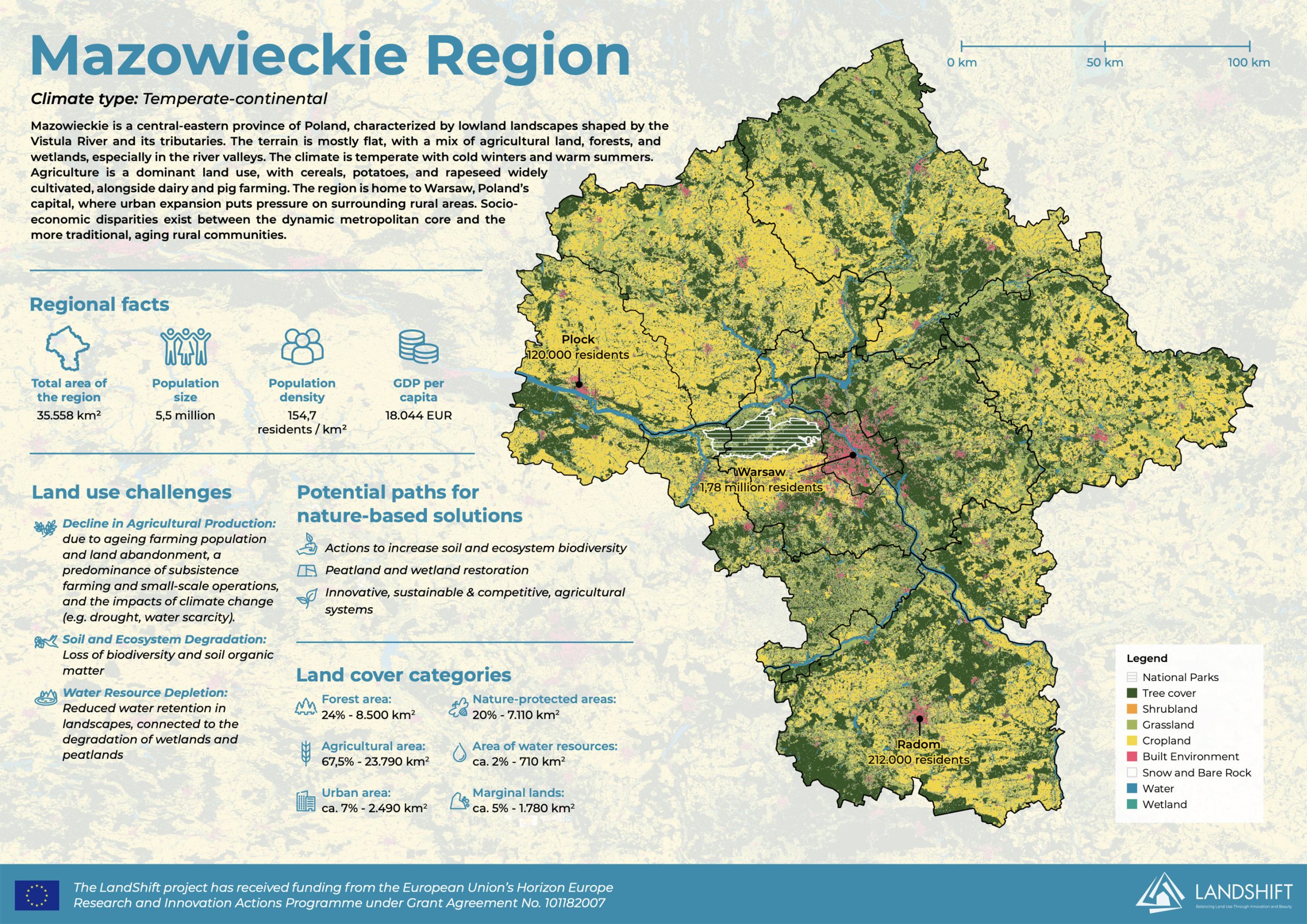
Mazovia stands out for its strong agricultural footprint: approximately 68% of its territory is cultivated, making it the country’s most valuable agricultural region. Family farms dominate the landscape, ranging from 5 to 20 hectares, though larger, more industrialised operations—particularly in fruit, vegetable and poultry or dairy production—are steadily growing.
Forests cover roughly one-fifth of the region, including the ecologically significant Kampinos Forest, a rare expanse of preserved lowland nature located just outside a major European capital. This unique mixture of metropolitan sprawl, productive farmland and valuable ecosystems makes land-use decisions in Mazovia especially consequential.
Environmental Challenges and Local Needs
One of Mazovia’s most pressing environmental issues is drought and water scarcity. Recent years have seen increasingly frequent and severe dry spells, leading to declining levels in rivers, lakes and groundwater. These conditions threaten crop yields and may force shifts toward drought-resistant varieties or new cultivation methods. Beyond agriculture, drought intensifies pressures on wetlands and forests and contributes to spatial disparities across the region. Land-use conflicts—driven by urban expansion, infrastructure development and agricultural demand—add complexity to long-term planning. Addressing these challenges requires approaches that balance human needs, environmental protection and economic stability.
How LandShift Is Helping
Through the Mazovia Living Space, communities, researchers and decision-makers are working together to develop solutions informed by regional knowledge and scientific evidence. The initiative aims to create shared strategies that reflect the needs of both metropolitan areas and rural communities.
LandShift supports this process by providing new data, modelling tools and frameworks that highlight how climate change, land use and local pressures interact. The Living Space will use these insights to explore future scenarios and identify practical pathways to strengthen resilience.
Community Involvement and Collaboration
The kick-off meeting revealed a strong readiness among participants—from local government to the academic sector—to collaborate on innovative approaches for achieving climate neutrality and protecting biodiversity. This willingness to work together across institutional boundaries has been one of the most rewarding aspects so far, setting the stage for deeper cooperation.
A Strong Regional Network of Actors
The Mazovia Living Space brings together local government representatives, NGOs, researchers and experts to reflect on the region’s diverse challenges and opportunities. Farmers and rural communities also play a central role, as agriculture remains one of the region’s defining economic and cultural pillars. The kick-off meeting on 8 October 2025 demonstrated strong engagement across sectors and created the foundations for collaborative work on the future of Mazovia’s landscapes.
Vision and Next Steps
The outcomes of the Mazovia Living Space will contribute directly to the development of the upcoming Mazovia Rural Development Strategy. The project’s findings—especially regarding sustainable land use, climate resilience and spatial inequalities—will provide essential data, tools and best practices that regional authorities can apply to long-term planning.
PRESS CONTACT
For more information, press materials, or interview requests, please contact:
Nikolaos Sotiriou
Dissemination & Communication Manager,
White Research