LandShift Kick-off Meeting in Paphos, Cyprus

LandShift Kick-off Meeting in Paphos, Cyprus

“LandShift represents a bold step toward transforming how we manage land use across Europe. By combining advanced technologies with community collaboration, we aim to create solutions that not only restore ecosystems and combat climate change but also empower communities to thrive in harmony with nature.”

Ioannis Varvaris – Scientific Coordinator, Eratosthenes Centre of Excellence

The alarming decline in net removals within the LULUCF (Land Use, Land Use Change, and Forestry) sector presents a significant challenge to advancing climate mitigation efforts. However, the sector offers considerable untapped potential for driving climate action through integrated strategies. By harnessing the diverse dimensions of land use and management, co created solutions can be developed to enhance carbon sequestration and strengthen ecosystem resilience.

To address these challenges, our LandShift project was created!

Specifically, the project aims to support climate neutrality in the land-use sector by 2035 through innovative, evidence based strategies that promote balanced trade-offs in land use among objectives such as climate change mitigation and adaptation, food and biomass production, and biodiversity protection.

It introduces a comprehensive framework aimed at supporting the co-development of regional strategic roadmaps that effectively balance socio-economic and environmental objectives. Through a synergistic and cohesive approach, LandShift aligns with all relative European Union key policies, such as the European Green Deal and New European Bauhaus (NEB), working to achieve climate neutrality and assist in the EU’s goal of removing 310 million tons of CO2 by 2030 through land-based actions and community collaboration.

The project was officially launched at the kick-off meeting in November 2024 in Paphos, Cyprus. All project partners, coming from 9 countries (Belgium, Cyprus, France, Greece, Italy, the Netherlands, Poland, Switzerland, and Ukraine) were present at the meeting, where they were able to present themselves, learn about each other, and build connections to facilitate collaboration in the context of the project. There was a strong emphasis on aligning vision, outlining goals, and grounding activities in the wider objectives of the project and overarching goal of fostering sustainable development. Now, the project is in its implementation phase, focusing on gradually testing solutions in its Living Spaces and engaging local communities through workshops and co-creation activities.

Indeed, LandShift’s added value lies in its integrated approach to tackling land-use challenges. A key innovation of the project is the development of Data Cubes—advanced tools that integrate diverse datasets to support monitoring, reporting, and decision-making processes. In a wider context, LandShift aims to become a leading example of climate-resilient land-use management, showing how to balance nature protection with human development. By creating a network of ‘Lighthouses for Climate-Resilient Land-Use Management’, the project will demonstrate how land can be used efficiently, ecosystems restored and protected, and communities strengthened to face climate change.

Press Release #1

Press Release #1

Brussels, 12/12/2024

The journey to a more climate-resilient Europe has begun with the official launch of LandShift, a Horizon Europe-funded project dedicated to transforming land-use management across Europe. With a duration of 36 months and a total budget of approximately €6 million, LandShift aims to support climate neutrality in the land-use sector by 2035 through innovative, evidence-based strategies that promote balanced trade-offs in land use among objectives such as climate change mitigation and adaptation, food and biomass production, and biodiversity protection (HORIZON-CL6-2024-CLIMATE-01).

Background

The alarming decline in net removals within the LULUCF (Land Use, Land Use Change, and Forestry) sector presents a significant challenge to advancing climate mitigation efforts.However, the sector offers considerable untapped potential for driving climate action through integrated strategies. By harnessing the diverse dimensions of land use and management, co-created solutions can be developed to enhance carbon sequestration and strengthen ecosystem resilience. To address these challenges, LandShift introduces a comprehensive framework aimed at supporting the co-development of regional strategic roadmaps that effectively balance socio-economic and environmental objectives. Through a synergistic and cohesive approach,LandShift aligns with all relative European Union key policies, such as the European Green Deal and New European Bauhaus (NEB), working to achieve climate neutrality and assist in the EU’s goal of removing 310 million tons of CO2 by 2030 through land-based actions and community collaboration.

In more detail

In alignment with relevant European Commission strategies and initiatives, LandShift’s mission and vision will be developed and advanced within five (5) Living Spaces established across European rural regions as exemplary real-life, community-based ecosystems under the frameworks of co-creation and co-governance. Specifically, the project aims to:

Develop innovative regional strategies for climate-neutral land use by deploying Nature-Based Solutions (NBS) that protect biodiversity, enhance food security, and support biomass production.

Establish five rural pilots called Living Spaces in France, Greece, Italy, Poland, and Ukraine to test, co-create, and co-govern solutions with local stakeholders.

Utilise Earth Observation (EO), Data Cube technologies, and Artificial Intelligence (AI) tools to analyse and resolve conflicts in land-use objectives.

Based on the above findings, create a decision-support framework for more effective, sustainable management of land resources.

Promote the principles of the New European Bauhaus, combining sustainability, aesthetics, and inclusiveness in every step.

Outcomes

LandShift’s added value lies in its integrated approach to tackling land-use challenges. A key innovation of the project is the development of Data Cubes—advanced tools that integrate diverse datasets to support monitoring, reporting, and decision-making processes. These Data Cubes will enable regional authorities, policymakers, and stakeholders to access and analyse critical land-use data, facilitating evidence-based decision-making. Furthermore, LandShift aims to become a leading example of climate-resilient land-use management, showing how to balance nature protection with human development. By creating a network of ‘Lighthouses for Climate-Resilient Land-Use Management’, the project will demonstrate how land can be used efficiently, ecosystems restored and protected, and communities strengthened to face climate change.

Consortium Partners

LandShift brings together a diverse group of leading institutions and organisations, each contributing unique expertise and resources towards the shared goal of tackling climate challenges in land use. Specifically, the Consortium comprises twenty-six (26) partners from across Europe, led by the Eratosthenes Centre of Excellence from Cyprus.

Quote

“LandShift represents a bold step toward transforming how we manage land use across Europe. By combining advanced technologies with community collaboration, we aim to create solutions that not only restore ecosystems and combat climate change but also empower communities to thrive in harmony with nature.”

Ioannis VarvarisScientific Coordinator, Eratosthenes Centre of Excellence

Next Steps

LandShift was officially launched at the kick-off meeting held on 12–13 November 2024 in Paphos, Cyprus, bringing together all partners. LandShift will now move into its implementation phase, focusing on gradually testing solutions in its Living Spaces and engaging local communities through workshops and co-creation activities.

Press Contacts

For more information, press materials, or interview requests, please contact:

Nikolaos Sotiriou Dissemination & Communication Manager,

White Research

[email protected]


LandShift in RCSy 2025

LandShift in RCSy 2025

For three days earlier this year, from March 17th to 19th, the city of Paphos in Cyprus was host to the “Eleventh International Conference on Remote Sensing and Geoinformation of Environment” (RCSy2025). It was an essential event to network with leading experts from across Europe and the world in the field of remote sensing and geoinformation.  Topics included 3D remote sensing, application to agriculture, earth observation, environment and climate, environmental monitoring and protection, and many more.

The LandShift project was proudly present at this event, and even co-organised the workshop on “Advancing Climate Action, Environmental Sustainability and Food Security through Synergies”. During the workshop, four partners from three partner organisations presented not only the project but also which elements of the project relate to the workshop as well as the conference as a whole.

Notably, coordinator Ioannis VARVARIS (Eratosthenes Centre of Excellence) presented the project, emphasising its integrated, transdisciplinary approach to sustainable land-use planning through co-creation with stakeholders, as well as the use of digital tools, and the implementation of Nature-Based Solutions that are aligned the New European Bauhaus principles.

Following this, fellow colleague from Eratosthenes, Dimitris KOUMOULIDIS presented his work on employing spatial queries in QGIS (an geographic information systems tool to make maps) in terms of identification and evaluation of potential sites for forest nurseries installation in the Limassol region of Cyprus. During his presentation, he actively demonstrated practical applications of geospatial tools such as QGIS in environmental planning, supporting reforestation, and landscape regeneration at the local level.  

Representing our Italian partners from the Politecnico di Milano, M. GABRIELE contributed to the workshop by presenting on the implementation of the land use, land use change, and forestry framework (LULUCF – see Glossary) monitoring platforms in the context of the agriculture, forestry, and other land-use (AFOLU) sector and regenerative agriculture. She very much highlighted the potential of advanced monitoring systems to support climate mitigation and land restoration efforts within the land-use sector.

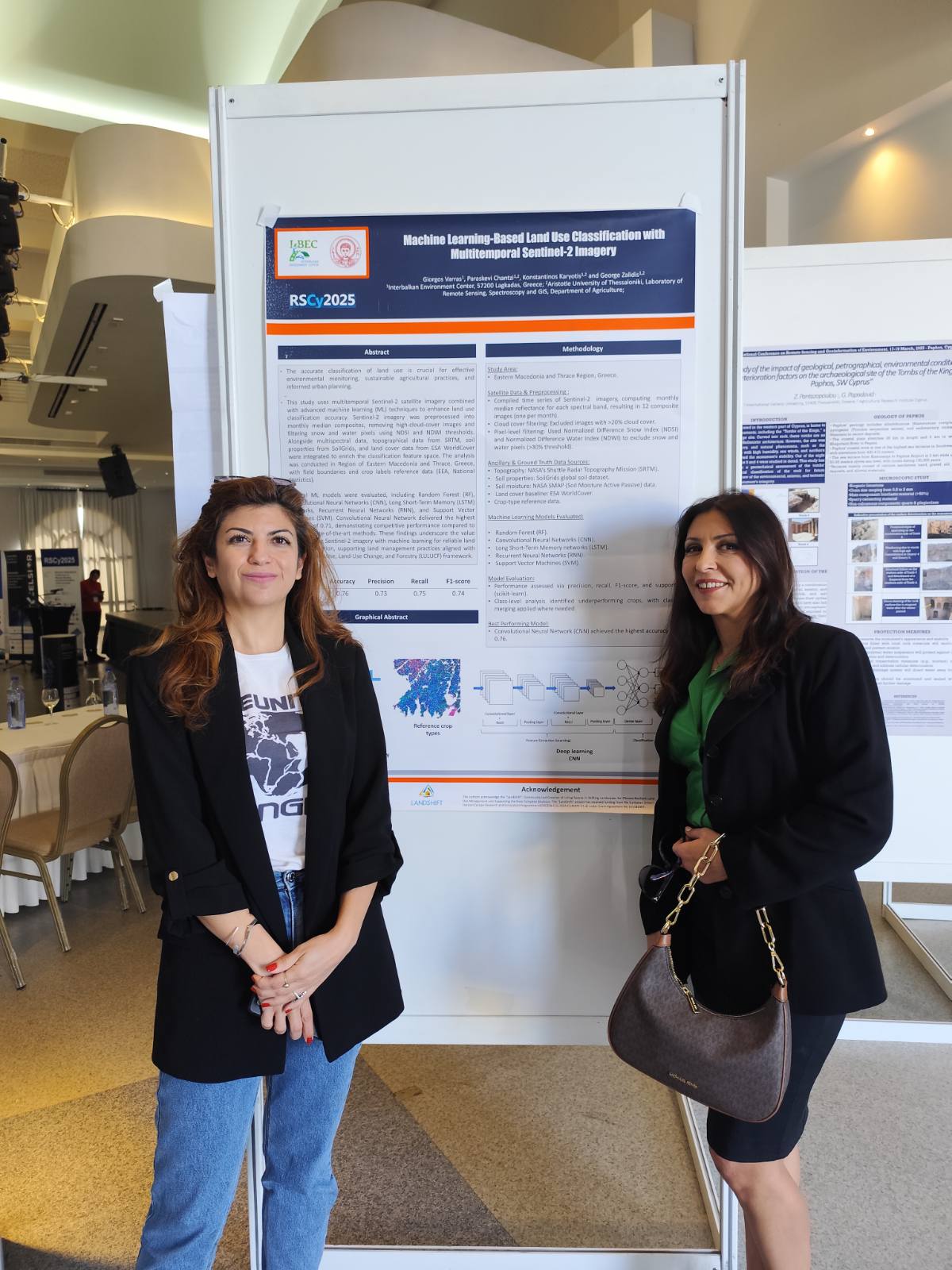
Finally, from the Interbalkan Environment Center, Dr. Paraskevi CHANTZI dived deep into the world of machine learning algorithms during the workshop, more specifically how they can be applied to multitemporal Sentinel-2 (a European Space Agency satellite used specifically to map changes in land cover and to monitor the world’s forests) imagery to significantly enhance land use classification accuracy. This in turn would support improved environmental monitoring and sustainable land management practices.  

One of the key aspects of attending such events is also to engage in fruitful discussions with other projects and participants present to learn more about other research but also examine the possibilities of future synergies together. The LandShift team present at RCSy2025 did just this, specifically with fellow attendees working on the topics of land-use monitoring, ecosystem restoration, and climate-resilient development. Engaging in such synergies further solidified the LandShift project’s position within the broader network of initiatives tackling land degradation, biodiversity loss, and climate adaptation through collaborative innovation.

In the future, LandShift and LandShift partners will continue to attend and/or present in conferences/events related to the project, and lay the foundation for future synergies to come with a wide array of stakeholders.

For more information on the RSCy 2025 event, please take a look at the link here: https://rscy2025.com/

Multi-Actor Approaches (MAA) first Workshop

Multi-Actor Approaches (MAA) first Workshop

One of the core methodologies of the LandShift project is to engage in Multi-Actor Approaches (MAA) as a cornerstone for cross-collaborative exercises and project output development. Indeed, utilising an MAA focuses on seizing opportunities and finding solutions to real needs, problems, and challenges faced by a wide range of stakeholders that are facing a similar, if not the same, challenge. In MAA projects, there is a strong collaboration of partners as well, especially those that have complementary expertise (scientific, practical, or any other) to ensure a holistic approach and maximise inclusivity in addressing specific challenges.

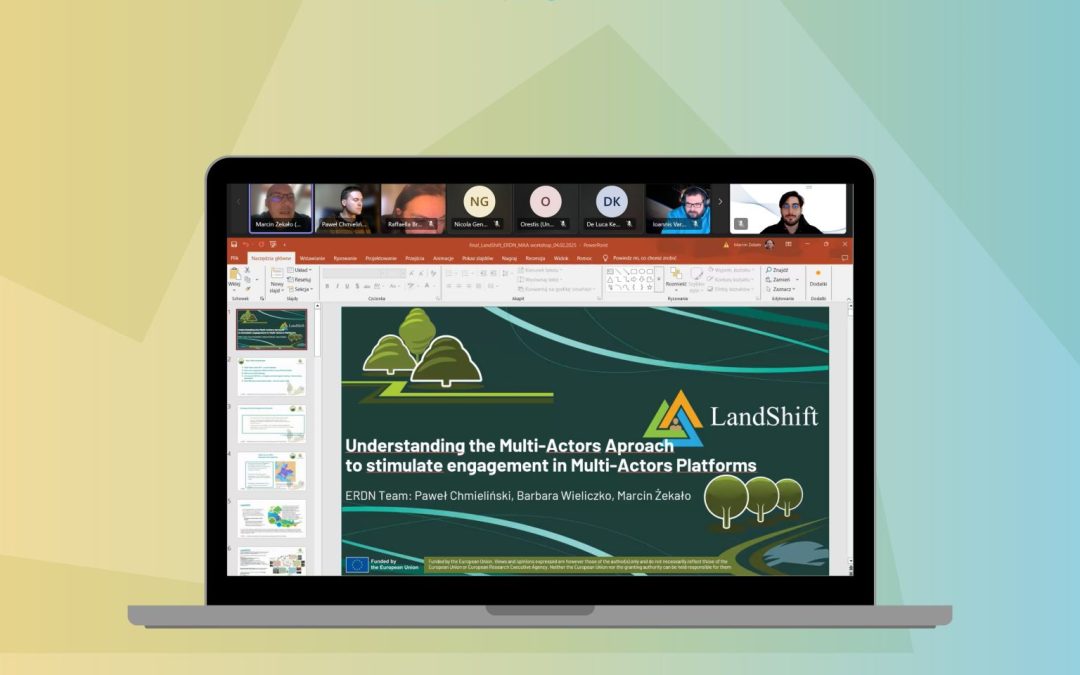
A few months ago, Polish partners from the European Rural Development Network engaged in an MAA and platform workshop to set the stage for collaboration and synergies across the project’s five living labs in France, Greece, Poland, and Ukraine.

This is an important step forward for the project as these living labs/living spaces will serve as a real-world testing grounds to tackle land-use challenges, balance competing demands, as well as foster co-creation, trust, and innovation in the long term. Indeed, through a structured co-creation process, from the co-planning stage to establishing co-governance, all stakeholders present will play a crucial in role in shaping sustainable land-use solutions to combat climate change.

Here it is very important to highlight not only the importance of the Living Spaces as testing grounds and also, both figuratively and literally, real-life applications, to understand the difference in approaches across 5 regions/countries, but also building connections across the spaces themselves.

Indeed, it is not only about the 5 spaces to act independently, but it is also about establishing a structure to share best practices, differences, common challenges, and key takeaways to foster shape sustainable land-use solutions in mitigating and adapting to climate change effects.

Learn more about such workshops in our methodology and our approach section.