LandShift at EU Green Week 2025

LandShift at EU Green Week 2025

For the past 25 years, the European Commission’s Directorate-General (DG) for Environment has been organising Europe’s learning environmental conference: EU Green Week.

It is one of the top opportunities of the year to raise awareness, discuss, and promote the latest and upcoming developments within the world of European environmental policy. Held in Brussels, attendees come from all over Europe and the world, such as policymakers, businesses, environmental actors, and all other interested parties.

This year, in early June, the edition of the conference was titled “Circular Solutions for a Competitive EU” focusing on exploring how to place circularity in the centre of Europe’s economic transition, grounded in the 3 C’s: Clean, Competitive, and Circular. Topics included how to drive sustainable competitiveness, reduce waste, increase strategic autonomy, as well as ways to promote innovation. 

Most importantly, the circular economy took centre stage as a key solution to the myriad of Europe’s most pressing challenges. 

LandShift’s very own partners and WP lead, White Research, attended the event to learn more about circularity, examine stakeholder interactions, and get inspired for future synergies. 


Indeed, our Landshift project and the EU Green Week conference have the same goal: reducing biogenic emissions, enhancing ecosystem resilience, and promoting sustainable resource management. On top of this, on multiple occasions, panelists emphasised the importance of integrating nature-based solutions into circularity as well as environmental management policies. 

This very much feeds into another aspect of such events: fostering synergies

We’re all working towards the same overarching goal: we want to build a sustainable future. And engaging with and learning from so many different people from all over Europe and the world is the best way to do so if we are to combine forces. Enough of working in silos.

 – Martin Fox, Project Manager at White Research, on attending EU Green  Week 2025

During the 3 days of the conference, many EU-funded projects were presented, focusing on their circular innovations and how they feed into fostering sustainable change across levels. 

For us, such interactions are essential because all EU-projects are working on the same goal, that of building a sustainable future. Examining how these projects interact, and what type of framework should be used to engage in synergies, either on a technical level or for raising awareness, should be studied and fine-tuned for all projects. 

Speakers, panelists, moderators, and attendees came from a wide range of industries, backgrounds, sectors, and countries, and their engagements were insightful and eye-opening. 

From textiles, forests, EU, national, regional, and local government, entrepreneurs, research, and much more: the panels and the networking opportunities were incredibly insightful. 

The drive for synergies was present, and the air was buzzing with it: all working towards a sustainable future.

For us, we apply the lessons learned and adapt them so that we can engage with other projects and activities to contribute to building a sustainable future.

It’s about synergies, not tradeoffs.


PRESS CONTACT

For more information, press materials, or interview requests, please contact:

Nikolaos Sotiriou

Dissemination & Communication Manager,

White Research
[email protected]

SDGsEYES Final User Uptake Event

SDGsEYES Final User Uptake Event

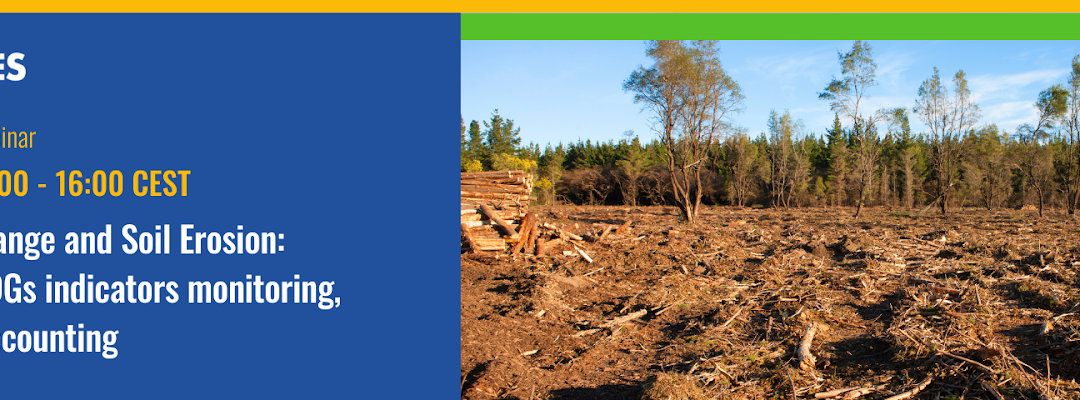
“Forest Cover Change & Soil Erosion with Earth Observation: SDGs Indicators Monitoring, Reporting and Accounting”
🗓 Date: 28 May 2025
🕒 Time: 14:00–16:00 CET
📍 Online
🔗 Register here

Join the final SDGsEYES user uptake webinar, organised by EARSC, to explore how Earth Observation (EO) tools are helping monitor forest cover change and soil erosion — in support of SDG 15: Life on Land.

This interactive session will showcase key tools and methodologies developed through the SDGsEYES project to enhance monitoring, reporting, and accounting (MRA) of land use dynamics.

 Why Attend?

  • Discover EO-based services for forest and soil monitoring.
  • Engage with experts from Forest Design (RO) and CMCC Foundation (IT).
  • Participate in hands-on demo sessions and provide feedback to help improve the tools for future applications.
  • Contribute to discussions on policy relevance and user uptake.

Preliminary Agenda

14:00–14:10 – Welcome & Opening
Part 1: Forest Cover Focus
14:10–14:25 – Service presentation (Forest Design, RO)
14:25–14:50 – Panel discussion with forest monitoring experts

Part 2: Soil Erosion Focus
14:50–15:05 – Service presentation (CMCC Foundation, IT)
15:05–15:30 – Panel discussion with soil erosion experts

15:30–15:50 – Breakout Rooms: Hands-on demos & usability discussions
15:50–16:00 – Conclusions & Next Steps

🔗 For the full agenda and additional details, click here.


WMF – We Make Future 2025

WMF – We Make Future 2025

📍 BolognaFiere, Italy | June 4–6, 2025

We Make Future (WMF) is one of Europe’s leading events dedicated to AI, digital innovation, sustainability, and future transformation — bringing together over 70,000 participants, 700+ exhibitors, and representatives from 90+ countries.

This dynamic platform offers excellent opportunities for projects and initiatives aiming to engage with a wide spectrum of actors, from research and policy to business and civil society.

Key opportunities include:

  • Participation as exhibitors or speakers in thematic areas such as AI, Climate, Territories, and Research4Future

  • Dissemination and visibility of project results and future outlook

  • Strategic networking and stakeholder engagement for long-term impact

🕒 A limited number of exhibition slots and discounted tickets are available until May 22nd.

🔗 More information here


Press Release #2

Press Release #2

BRUSSELS – 02/05/2025

The journey to a more climate-resilient Europe is underway with LandShift, a Horizon Europe-funded project dedicated to transforming land-use management across Europe. With a duration of 36 months and a total budget of approximately €6 million, LandShift supports climate neutrality in the land-use sector by 2035 through innovative, evidence based strategies that promote balanced trade-offs in land use with objectives such as climate change mitigation and adaptation, food and biomass production, and biodiversity protection (HORIZON-CL6-2024-CLIMATE-01).

WEBSITE LAUNCH

Six months into the project, it is time to share an important milestone of the project: our website is now live at www.landshift.eu.

The project website serves as the first port of entry for any information related to the project. Not only do we learn about the objectives of the project and the prospective outcomes, but also about the partners, the deliverables, and the wider implications of the project. It also serves as a repository for publications and outputs, as well as a way to access the project’s social media accounts and other forms of online presence.

The project website serves as the first port of entry for any information related to the project. Not only do we learn about the objectives of the project and the prospective outcomes, but also about the partners, the deliverables, and the wider implications of the project. It also serves as a repository for publications and outputs, as well as a way to access the project’s social media accounts and other forms of online presence. Here, it is important to highlight the living nature of the website: it is not static. It is living.

The website will be updated matching the progress of the project: when a major milestone happens, the website will be updated. When there is a new deliverable and/or publication, the website gets updated. When a new video is made, it goes on the website.

This way, the website serves as the information hub for the project for the wider public. Any important information will be presented, and will also offer ways for more interested audience members to learn more about the topic and reach out to the project for further information. The content for the website is tailored to all the project’s stakeholder groups, with content for the general public, members of the scientific community, policy-makers, and industry representatives.

IN MORE DETAIL

The next steps of the project are to move into the implementation phase, focusing on gradually testing solutions in its Living Spaces as well as engaging in local communities through workshops and co-creation activities.

At the same time, the online presence of the project will continuously be updated, either on the project website or on social media, or both, informing audience members about project updates and outputs, as well as any information related to the topic of the sustainable land management as a whole.

OUTCOMES

LandShift’s added value lies in its integrated approach to tackling land-use challenges.

A key innovation of the project is the development of Data Cubes—advanced tools that integrate diverse datasets to support monitoring, reporting, and decision-making processes. These Data Cubes will enable regional authorities, policymakers, and stakeholders to access and analyse critical land-use data, facilitating evidence-based decision-making.

Furthermore, LandShift aims to become a leading example of climate-resilient land-use management, showing how to balance nature protection with human development. By creating a network of ‘Lighthouses for Climate-Resilient Land-Use Management’, the project will demonstrate how land can be used efficiently, ecosystems restored and protected, and communities strengthened to face climate change.

MORE ABOUT LANDSHIFT

The alarming decline in net removals within the LULUCF (Land Use, Land Use Change, and Forestry) sector presents a significant challenge to advancing climate mitigation efforts. However, the sector offers considerable untapped potential for driving climate action through integrated strategies. By harnessing the diverse dimensions of land use and management, co-created solutions can be developed to enhance carbon sequestration and strengthen ecosystem resilience.

To address these challenges, LandShift introduces a comprehensive framework aimed at supporting the co-development of regional strategic roadmaps that effectively balance socio-economic and environmental objectives. Through a synergistic and cohesive approach, LandShift aligns with all relevant European Union key policies, such as the European Green Deal and New European Bauhaus (NEB), working to achieve climate neutrality and assist in the EU’s goal of removing 310 million tons of CO2 by 2030 through land-based actions and community collaboration.

PRESS CONTACT

For more information, press materials, or interview requests, please contact:

Nikolaos Sotiriou

Dissemination & Communication Manager,

White Research
[email protected] 

LandShift Kick-off Meeting in Paphos, Cyprus

LandShift Kick-off Meeting in Paphos, Cyprus

“LandShift represents a bold step toward transforming how we manage land use across Europe. By combining advanced technologies with community collaboration, we aim to create solutions that not only restore ecosystems and combat climate change but also empower communities to thrive in harmony with nature.”

Ioannis Varvaris – Scientific Coordinator, Eratosthenes Centre of Excellence

The alarming decline in net removals within the LULUCF (Land Use, Land Use Change, and Forestry) sector presents a significant challenge to advancing climate mitigation efforts. However, the sector offers considerable untapped potential for driving climate action through integrated strategies. By harnessing the diverse dimensions of land use and management, co created solutions can be developed to enhance carbon sequestration and strengthen ecosystem resilience.

To address these challenges, our LandShift project was created!

Specifically, the project aims to support climate neutrality in the land-use sector by 2035 through innovative, evidence based strategies that promote balanced trade-offs in land use among objectives such as climate change mitigation and adaptation, food and biomass production, and biodiversity protection.

It introduces a comprehensive framework aimed at supporting the co-development of regional strategic roadmaps that effectively balance socio-economic and environmental objectives. Through a synergistic and cohesive approach, LandShift aligns with all relative European Union key policies, such as the European Green Deal and New European Bauhaus (NEB), working to achieve climate neutrality and assist in the EU’s goal of removing 310 million tons of CO2 by 2030 through land-based actions and community collaboration.

The project was officially launched at the kick-off meeting in November 2024 in Paphos, Cyprus. All project partners, coming from 9 countries (Belgium, Cyprus, France, Greece, Italy, the Netherlands, Poland, Switzerland, and Ukraine) were present at the meeting, where they were able to present themselves, learn about each other, and build connections to facilitate collaboration in the context of the project. There was a strong emphasis on aligning vision, outlining goals, and grounding activities in the wider objectives of the project and overarching goal of fostering sustainable development. Now, the project is in its implementation phase, focusing on gradually testing solutions in its Living Spaces and engaging local communities through workshops and co-creation activities.

Indeed, LandShift’s added value lies in its integrated approach to tackling land-use challenges. A key innovation of the project is the development of Data Cubes—advanced tools that integrate diverse datasets to support monitoring, reporting, and decision-making processes. In a wider context, LandShift aims to become a leading example of climate-resilient land-use management, showing how to balance nature protection with human development. By creating a network of ‘Lighthouses for Climate-Resilient Land-Use Management’, the project will demonstrate how land can be used efficiently, ecosystems restored and protected, and communities strengthened to face climate change.

Press Release #1

Press Release #1

Brussels, 12/12/2024

The journey to a more climate-resilient Europe has begun with the official launch of LandShift, a Horizon Europe-funded project dedicated to transforming land-use management across Europe. With a duration of 36 months and a total budget of approximately €6 million, LandShift aims to support climate neutrality in the land-use sector by 2035 through innovative, evidence-based strategies that promote balanced trade-offs in land use among objectives such as climate change mitigation and adaptation, food and biomass production, and biodiversity protection (HORIZON-CL6-2024-CLIMATE-01).

Background

The alarming decline in net removals within the LULUCF (Land Use, Land Use Change, and Forestry) sector presents a significant challenge to advancing climate mitigation efforts.However, the sector offers considerable untapped potential for driving climate action through integrated strategies. By harnessing the diverse dimensions of land use and management, co-created solutions can be developed to enhance carbon sequestration and strengthen ecosystem resilience. To address these challenges, LandShift introduces a comprehensive framework aimed at supporting the co-development of regional strategic roadmaps that effectively balance socio-economic and environmental objectives. Through a synergistic and cohesive approach,LandShift aligns with all relative European Union key policies, such as the European Green Deal and New European Bauhaus (NEB), working to achieve climate neutrality and assist in the EU’s goal of removing 310 million tons of CO2 by 2030 through land-based actions and community collaboration.

In more detail

In alignment with relevant European Commission strategies and initiatives, LandShift’s mission and vision will be developed and advanced within five (5) Living Spaces established across European rural regions as exemplary real-life, community-based ecosystems under the frameworks of co-creation and co-governance. Specifically, the project aims to:

Develop innovative regional strategies for climate-neutral land use by deploying Nature-Based Solutions (NBS) that protect biodiversity, enhance food security, and support biomass production.

Establish five rural pilots called Living Spaces in France, Greece, Italy, Poland, and Ukraine to test, co-create, and co-govern solutions with local stakeholders.

Utilise Earth Observation (EO), Data Cube technologies, and Artificial Intelligence (AI) tools to analyse and resolve conflicts in land-use objectives.

Based on the above findings, create a decision-support framework for more effective, sustainable management of land resources.

Promote the principles of the New European Bauhaus, combining sustainability, aesthetics, and inclusiveness in every step.

Outcomes

LandShift’s added value lies in its integrated approach to tackling land-use challenges. A key innovation of the project is the development of Data Cubes—advanced tools that integrate diverse datasets to support monitoring, reporting, and decision-making processes. These Data Cubes will enable regional authorities, policymakers, and stakeholders to access and analyse critical land-use data, facilitating evidence-based decision-making. Furthermore, LandShift aims to become a leading example of climate-resilient land-use management, showing how to balance nature protection with human development. By creating a network of ‘Lighthouses for Climate-Resilient Land-Use Management’, the project will demonstrate how land can be used efficiently, ecosystems restored and protected, and communities strengthened to face climate change.

Consortium Partners

LandShift brings together a diverse group of leading institutions and organisations, each contributing unique expertise and resources towards the shared goal of tackling climate challenges in land use. Specifically, the Consortium comprises twenty-six (26) partners from across Europe, led by the Eratosthenes Centre of Excellence from Cyprus.

Quote

“LandShift represents a bold step toward transforming how we manage land use across Europe. By combining advanced technologies with community collaboration, we aim to create solutions that not only restore ecosystems and combat climate change but also empower communities to thrive in harmony with nature.”

Ioannis VarvarisScientific Coordinator, Eratosthenes Centre of Excellence

Next Steps

LandShift was officially launched at the kick-off meeting held on 12–13 November 2024 in Paphos, Cyprus, bringing together all partners. LandShift will now move into its implementation phase, focusing on gradually testing solutions in its Living Spaces and engaging local communities through workshops and co-creation activities.

Press Contacts

For more information, press materials, or interview requests, please contact:

Nikolaos Sotiriou Dissemination & Communication Manager,

White Research

[email protected]