Launch of a new Cluster: A Collaborative Step Toward Climate-Resilient Agriculture

Launch of a new Cluster: A Collaborative Step Toward Climate-Resilient Agriculture

LandShift is proud to be one of the founding members of the newly launched AgroTech Hub Cluster, a collaboration platform that unites several Horizon Europe projects working on agriculture, climate innovation, and sustainable land management. The cluster brings together initiatives that share a common vision: building a more connected, knowledge-driven, and climate-resilient agricultural future for Europe.

Alongside NOSTRADAMUS, AgRimate, Agrarian, EARTHONE, OpenAgri, Climate Farm Demo, and ENFORCE, LandShift is contributing to an ambitious effort to strengthen cooperation, amplify impact, and support the transition toward more sustainable land-use systems across the EU.

Why the Cluster Matters

Across Europe, agriculture faces mounting challenges linked to climate pressures, biodiversity loss, land-use demands, and the need for better data and digital tools. The Cluster was created to help address these challenges collectively by:

  • improving knowledge exchange among research and innovation teams

  • aligning efforts and avoiding overlap across projects

  • developing shared activities that raise visibility and encourage collaboration

  • supporting practical pathways for data-driven, nature-based solutions

By joining forces, the projects can reach broader audiences, strengthen their engagement with policymakers, and ensure that their results have greater impact.

Highlights from the first Synergy Meeting

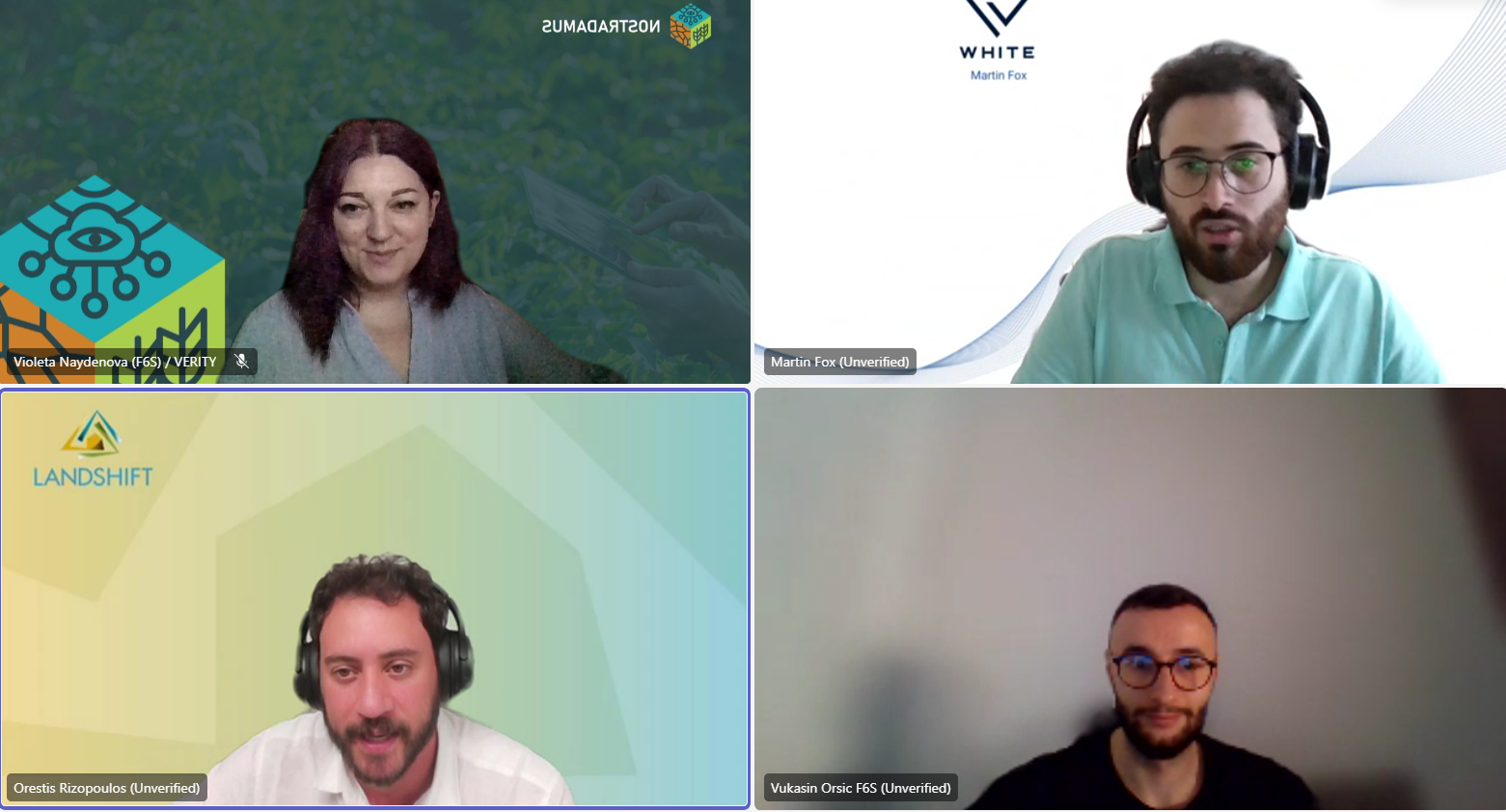
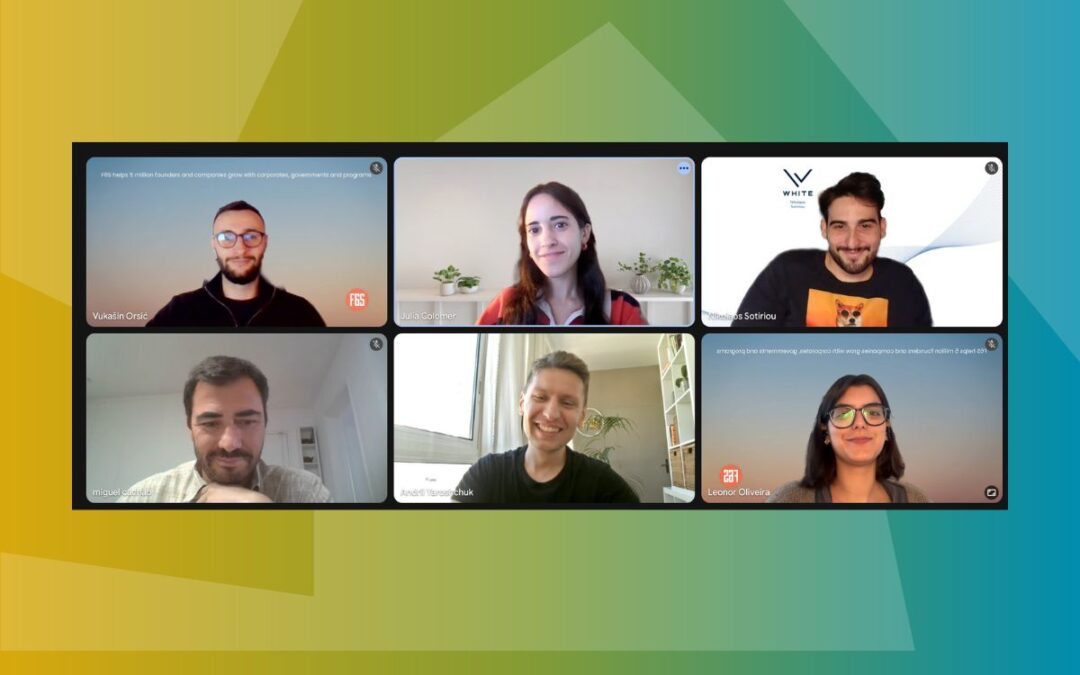
The cluster’s first synergy meeting marked the start of this joint journey. Partners from all projects came together to share their work, exchange perspectives, and define how the cluster will operate.

The session began with introductions and project presentations, allowing partners to better understand each initiative’s goals, regions, and expertise. This created a strong foundation for aligning interests and building meaningful connections.

A co-creation process was then launched to choose the cluster’s official name and visual identity, giving all partners a voice in shaping the shared brand. The group also agreed to establish a bi-monthly meeting rhythm to maintain momentum and ensure regular collaboration.

One of the key outcomes of the meeting was the decision to develop a joint webinar series, bringing together experts from across the projects. The webinars will explore topics such as AI in agriculture, nature-based innovation, data ecosystems, climate modelling, living labs, and open innovation.

Looking Ahead

The Cluster is an important step toward creating a stronger innovation community for Europe’s agriculture and land-use sectors. Through shared activities, coordinated communication, and collective learning, the cluster aims to support stakeholders across Europe in adopting climate-resilient, sustainable and community-centred land-use practices.

As a founding member, LandShift is committed to contributing expertise from its five Living Spaces, its work on nature-based solutions, and its community-driven models for sustainable land planning. Together, the cluster partners are building the foundations for a more collaborative and future-ready agricultural landscape.


PRESS CONTACT

For more information, press materials, or interview requests, please contact:

Nikolaos Sotiriou

Dissemination & Communication Manager,

White Research

[email protected]

LandShift at EURAF 2025: Advancing Nature-Based and Community-Led Land Use Across Europe

LandShift at EURAF 2025: Advancing Nature-Based and Community-Led Land Use Across Europe

LandShift took part in the European Agroforestry Federation (EURAF) meeting in Brussels, where our colleague Francesco Pancaldi represented both the Metabolic Institute and the LandShift project. The meeting brought together practitioners, researchers, and policymakers to explore how organic farming, agroecology and agroforestry can support the implementation of the Nature Restoration Regulation (NRR) across Europe.

Hosted by the European Economic and Social Committee, the event gathered a diverse group of scientific experts, government representatives and sector organisations committed to restoring degraded ecosystems and designing land-use systems that protect biodiversity and ecosystem services. With more than 80% of Europe’s ecosystems currently degraded, the NRR is a pivotal policy for ensuring healthier landscapes for future generations—particularly in agricultural regions where land-use decisions have an outsized impact.


Sharing LandShift’s Evidence-Based Approach

During the meeting, Francesco presented how LandShift is contributing to the transition towards nature-based land management through its work in five European regions. He highlighted:

  • the use of fine-scale land-use data

  • the deployment of nature-based solutions tailored to regional contexts

  • the development of a community-led land-use governance model

This combination of scientific insights, ecological understanding and local engagement forms the backbone of LandShift’s approach to climate-resilient land management. By integrating regional knowledge with advanced data tools, the project supports more informed and equitable decision-making processes.

Connecting Policy, Research and Practice

Discussions at EURAF underscored the essential role of collaboration between EU-funded research and innovation projects and policymakers. Bridging the gap between scientific results and real-world implementation is central to ensuring that Europe’s land-use systems can adapt to climate pressures while supporting local communities and economies.

Events like EURAF play an important role in strengthening these connections, helping to translate research into actionable strategies that can be applied at scale. For LandShift, the meeting was a valuable opportunity to share emerging insights, exchange perspectives with leading experts, and contribute to the collective effort to promote data-driven, community-led and nature-based land-use solutions across the EU.


PRESS CONTACT

For more information, press materials, or interview requests, please contact:

Nikolaos Sotiriou

Dissemination & Communication Manager,

White Research

[email protected]

Mission Possible: LandShift at European Researchers’ Night 2025 in Cyprus

Mission Possible: LandShift at European Researchers’ Night 2025 in Cyprus

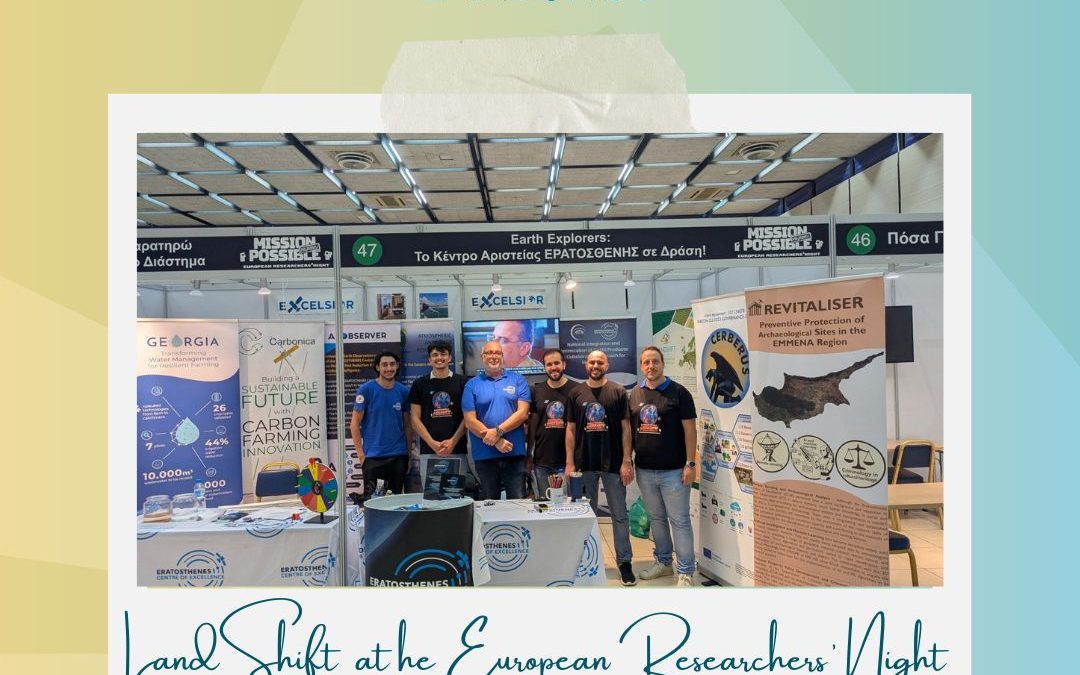
LandShift took centre stage at the European Researchers’ Night 2025 in Cyprus, an annual flagship initiative organised by the Research and Innovation Foundation (RIF). The event is part of a Europe-wide celebration dedicated to bringing science and innovation closer to citizens, with activities designed to inspire curiosity, connect research to everyday life, and highlight the role of science in shaping our shared future.

This year’s motto, “Mission Possible”, captured the spirit of the evening: addressing today’s global challenges with creativity, knowledge, and collaboration. Against this backdrop, LandShift was presented at the ERATOSTHENES Centre of Excellence (ECoE) booth, offering visitors an opportunity to learn how European research is paving new pathways for sustainable land use and climate resilience.


Introducing LandShift to the public

Representing the project, Dimitrios Koumoulides (MCIHort) engaged with citizens of all ages from students and young researchers to families and policymakers introducing LandShift as an EU-funded Horizon Europe project.

He explained that the project’s unique strength lies in its ability to bridge top-down policy needs with bottom-up community action, creating a balanced approach to land-use management that is both data-driven and people-centred. Visitors discovered how LandShift brings together advanced research, digital tools, and local participation to answer some of the most pressing land-use challenges of our time.

Five Living Spaces, five laboratories for change

A key highlight of the presentation was LandShift’s work across five Living Spaces:

  • 🇫🇷 Occitanie (France)

  • 🇬🇷 Eastern Macedonia and Thrace (Greece)

  • 🇮🇹 Basilicata (Italy)

  • 🇵🇱 Mazowieckie (Poland)

  • 🇺🇦 Kyiv Region (Ukraine)

Each Living Space acts as a real-world laboratory, where stakeholders and local communities come together to co-develop strategies for:

  • 🌱 Improving soil health

  • 🦋 Conserving biodiversity

  • 💧 Managing freshwater resources

  • 🌍 Achieving balanced land-use trade-offs

Through these collaborative spaces, LandShift ensures that solutions are not imposed from the outside but co-created with those who are directly affected. This approach fosters both trust and long-term sustainability.

Science, technology, and communities working together

Visitors to the booth also learned about the role of AI and scenario analysis in the project. These digital tools allow researchers and policymakers to test different land-use options, compare outcomes, and design future strategies that are resilient and adaptable.

At the same time, Dimitrios emphasised that LandShift is not only about science and technology it is also about people. By embedding stakeholder engagement and co-governance at the core of its methodology, LandShift ensures that local priorities, cultural contexts, and social realities are always respected.

This people-first approach is further strengthened by the project’s commitment to the principles of the New European Bauhaus  designing land management solutions that are environmentally sustainable, socially inclusive, and culturally meaningful.

Mission Possible: a shared European pathway

In the lively atmosphere of European Researchers’ Night, LandShift demonstrated how research can become a catalyst for real-world transformation. The project’s vision of resilient landscapes, sustainable food systems, and inclusive communities  resonated strongly with the theme “Mission Possible.”

By bridging policies with communities, and science with society, LandShift is contributing to a shared European pathway towards climate-resilient land use, aligning environmental needs with human aspirations.


🔗 Learn more about European Researchers’ Night in Cyprus:

🔗 Explore LandShift: landshift.eu

PRESS CONTACT

For more information, press materials, or interview requests, please contact:

Nikolaos Sotiriou

Dissemination & Communication Manager,

White Research
[email protected]

NetworkNature Annual Event 2025 | Choose Nature

NetworkNature Annual Event 2025 | Choose Nature

Date: 16/09/2025
Location: Brussels, Belgium

The NetworkNature Annual Event 2025 – “Choose Nature” will explore how biodiversity and the economy can be aligned in times of urgency, with a focus on Nature-based Solutions (NbS). The programme includes four thematic sessions (Work with and for nature, Trust nature and people, Invest in nature, Partner with nature), an exhibition Why Choose Nature?, and the launch of the NbS Business Forum.

👉 Learn more about the event here


First Synergy Established: LandShift & NOSTRADAMUS!

First Synergy Established: LandShift & NOSTRADAMUS!

One of the core parts of our project is to engage in synergies with other EU-funded projects working on the same/similar topic, in a complementary way.

However, a synergy is a term used very often in the field of Sustainability Science, and to avoid confusion, we refer to it as when two or more interventions’ combined generation results in progress in their activities that is greater than the sum of the individual impacts of each activity. This is inspired by Pedercini et al., 2019, “Harvesting Synergy from Sustainable Development Goals”, available here.

In the case of LandShift, our goal is to engage with other EU-funded projects and initiatives that are working on sustainable land management, nature-based solutions, or similar topics. Our goal is twofold: First, we wish to raise awareness of each other’s projects, inviting the audiences of one project to engage with the content of the other. This can be achieved through activities such as attending each other’s events, mentioning each other in newsletters, and so forth. The second step, however, is a lot more technical. We aim to explore the potential for the research and results of each project to contribute to the scientific advancements of the others. For too long, EU projects have been working in silos, even though we are all working towards the same goal: a more sustainable future.

There are strong interconnections within the EU Projects world, and our first step in engaging in synergies is to identify those EU projects and isolate which ones have the strongest connection, both in terms of a partnership connection as well as a topical one. We have identified a set of projects and have begun reaching out to them. 

One of those projects is NOSTRADAMUS, Data Cube and Copernicus Data for Food Security and European Independence.

Coordinated by the Eratosthenes Centre of Excellence (Cyprus), it is an innovative EU-funded project dedicated to advancing the sustainability and resilience of the agricultural sector in alignment with the Farm to Fork strategy, the Common Agricultural Policy, and the European strategy for data. By developing a robust, real-time digital platform, NOSTRADAMUS harnesses the power of Earth Observation, IoT, and advanced algorithms to optimize resource use, enhance yields, and promote sustainable farming practices.

The primary goal of NOSTRADAMUS is to safeguard EU Food Security and independence in agricultural inputs by creating a centralised Data Cube Ecosystem for real-time, aggregated, and accessible agricultural data, while also developing open-source digital applications to modernise and enhance the efficiency, resilience, and competitiveness of the EU agricultural sector. A key feature of the project includes two Open Calls, providing €400,000 in funding to innovative third-party projects that aim to enhance farm decision-making and develop digital tools for policy creation.

Last week, we had our first LandShift-NOSTRADAMUS meeting, where LandShift coordinators and dissemination leaders met with their counterparts of the NOSTRADAMUS project.

The meeting was very fruitful and very positive: the eagerness and drive for synergies was there.

Some of the topics discussed were:

  • Exchanging social media channels, following each other’s projects, and fostering engagement;
  • Feature each other’s projects on our respective websites;
  • Mention project advancements in each other’s newsletters;
  • Jointly participate in specialized or themed events, conferences, and panel discussions;
  • Organize and host joint webinars and workshops for mutual stakeholders;

The next steps are now to foster technical synergies between the two projects, where topical experts are able to come together to present, collaborate, and co-generate results.

For further information on NOSTRADAMUS, please take a look:

On our side, we will continue to reach out to other projects and lay the groundwork for future synergies between us and other projects.

Only together can we build a sustainable future.

It’s about synergies, not tradeoffs.


Martin Fox

Martin Fox

Associate Dissemination & Communication Manager at LandShift